Subah ke 6:45 baje the, aur Chennai ke us old joint family house mein din ka pehla alarm kuch phone se nahi, Ammamma ki awaaz se bajta tha.
“Priyaaa, filter coffee ka decoction ready hai ya phir aaj bhi sabko hospital ke chai pe zinda rakhna hai?”
Kitchen se Amma Priya Iyer ka thaka hua, par trained smile wala reply aaya, “Bas aa gaya, Amma.”
Dining table pe steel plates set ho rahe the, temple bell ki halki si sound ghar ke andar tak aa rahi thi, aur hawa mein coffee, ghee toast aur nayi tension ka familiar mix tha. Is house mein subah ka ritual almost sacred tha—pehle coffee, phir commentary session. Aur commentary ka topic almost har din same hota tha: Ananya aur Meera.
Ananya Iyer, 24, already office bag shoulder pe daal chuki thi. Crisp shirt, neat ponytail, face pe woh expression jo bolta tha, “Main bas nikal rahi hoon, please mujhe aaj test mat karo.” IIT se nikal ke Bengaluru mein tech role milna family mein literally ek trophy jaisa treat hota tha. Ammamma ke liye woh “ghar ki shaan” thi, Raghavan ke liye “settled beti,” aur relatives ke liye “package kitna hai?” ka live answer.
Meera, 21, breakfast table ke corner pe baithi apne phone mein kisi wedding decor board ko scroll kar rahi thi. Uska dupatta shoulder se half-slide ho chuka tha, aur uske face pe woh dramatic innocence thi jo bolti thi, “Main kuch galat nahi kar rahi, bas duniya ko thoda pretty bana rahi hoon.” Woh ghar ke functions mein sabse zyada active rehti thi, lekin family ke liye wo “creative hai, par serious kab hogi?” category mein permanently parked thi.
Ammamma ne pehli sip li aur bina kisi warning ke bola, “Ananya, Bengaluru mein log time pe office jaate hain na? Ya tum bhi aajkal ‘work from home’ ka matlab ‘work from bed’ samajh rahi ho?”
Ananya ne lipstick adjust karte hue kaha, “Ammamma, main 9 se pehle nikal jaungi. Don’t worry.”
“Worry kaun kar raha hai,” Ammamma ne turant reply diya. “Main toh bas dekh rahi hoon, ek beti engineering karke naam kar rahi hai, aur ek ghar ke function sambhal rahi hai. Par career toh career hota hai, na?”
Meera ki fingers ek second ke liye phone pe ruk gayi. Usne smile kiya, woh wala smile jo family functions mein sabko lagta hai cute hai, par andar se thoda sa cut lagata hai.
“Haan, Ammamma,” Meera ne halka sa laugh karke kaha. “Career toh career hota hai. Bas uska costume kabhi lehenga hota hai, kabhi laptop.”
Acchhi Lagi Kahani? Apne Doston Se Share Karna Na Bhoolen! 💖
Priya ne jaldi se plate mein idli rakhte hue topic change karne ki koshish ki, “Aaj cousin Radha ki shaadi hai. Sab time pe pahunchna hai. Meera, décor wala kaam dekh lena.”
Meera ne eyes bright karke nod kiya. “Already done, Amma. Stage flowers, entry arch, table linens, photobooth props—sab set. Aur haan, local vendor se negotiate karke 18,000 bachaye bhi.”
Raghavan, jo newspaper ke peeche se half-listening tha, bas itna bola, “Good, good.”
Ammamma ne no big deal tone mein kaha, “Arre negotiation toh har koi kar leta hai. Dekho Ananya, uska package hai, uska future hai. Meera ko bas shaadi-wadi mein interest hai.”
Meera ne kuch bolne ke liye mouth khola, phir band kar diya. Ananya ne apni coffee ka last sip liya aur silently bag uthaya. Dono sisters ka daily routine alag tha, par pressure ka flavour same. Ek ko har waqt excellent rehna tha. Dusri ko har waqt “practical” prove karna tha.
Shaadi ka din aaya toh house mein chaos ka full festival ho gaya. Cousins, uncles, aunties, catering wale, flower boxes, saree pleats, and endless “Arre woh ribbon kidhar gaya?” type emergencies. Meera, as usual, front line pe thi. She was everywhere—vendor ko call kar rahi thi, bride side ke changes note kar rahi thi, chachi ko calm kar rahi thi, aur photobooth ke paas khade chhote bachchon ko “bas ek minute, princess entry baad mein” keh rahi thi.
Usne poora décor aise design kiya tha ki hall ka plain beige space ek dreamy mandap zone mein transform ho gaya. Marigold aur jasmine ka combo, soft fairy lights, recycled wooden signboards, and budget-friendly drapes—sab itna thoughtfully done tha ki even the family’s most critical aunties were pausing to say, “Accha hai, kaafi accha hai.”
Phir dopahar mein relatives ka “successful niece” announcement start ho gaya.
Ananya ko stage ke paas bulaaya gaya, because “IIT wali beti hai, kuch do shabd bolne hain.” She hated these moments. Not because she was shy, but because everyone expected her to stand there like a poster of achievement. She gave a polite, polished speech about innovation, learning, and family support. Taaliyan baji, logon ne “wah wah” kiya, and someone loudly said, “Dekha, beta ho toh aisa!”
Ananya smiled, but her jaw tightened. She had heard that line too many times in too many versions.
Tabhi Ammamma ne loud enough voice mein, almost proudly, bola, “Dekho, ek beti engineering karke naam kar rahi hai, aur ek ghar ke function sambhal rahi hai. Par career toh career hota hai, na? Jo serious hota hai, woh office mein hota hai.”
For one second, laughter spread around the table. The kind of laughter that comes from habit, not joy. Meera’s face changed. It was tiny, but Ananya noticed it instantly. Meera’s smile didn’t disappear—she was too trained for that—but it thinned, like someone had pulled a thread from a curtain.
Meera tried to speak. “Actually, Ammamma, main aapse ek cheez share karna chahti thi. Main—”
But one of the elder uncles cut in, “Arre pehle shaadi ka program toh ho jaane do. Baad mein career-carrer baat karna.”
And just like that, Meera’s sentence died in the air.
Ananya felt something shift inside her. Usually she stayed out of these conversations. Her rule was simple: handle your own plate, don’t get pulled into family politics. But now she saw Meera standing there, cheeks slightly pink, hands busy with a tray she didn’t need to hold anymore. It wasn’t just about a comment. It was about being made invisible in the middle of her own work.
That night, after the wedding madness was over and the house had entered its tired silence, Ananya walked past Meera’s room. The door was half-open. Inside, Meera was asleep on the bed with her laptop still open, one hand on a printed budget sheet. On the table lay vendor lists, timeline charts, floral mood boards, client notes, and a spreadsheet so detailed it looked more professional than half the corporate decks Ananya had seen.
Ananya froze.
She picked up one page carefully. There were columns for cost, backup options, margin estimates, and even a note that said, “If bride is anxious, keep one calm person near her at all times. Joy is logistics + emotion.” Ananya stared at that line for a full ten seconds.
Meera wasn’t playing dress-up with wedding ideas. She had been building a real skillset. Quietly. Seriously. Without asking for permission.
At the same time, from the corridor, Ananya overheard Ammamma talking to Amma in a low voice.
“Priya, main unko compare karti hoon kyunki samajh nahi aata. Duniya badal rahi hai na. Ek ke paas stable job hai, doosri ke paas creativity hai. Main bas chahti hoon koi ek toh safe rahe. Ek ko respect mile, ek ko stability. Par main bolne ka tareeka galat kar deti hoon.”
Priya sighed, voice tired but softer than usual. “Amma, support bhi kabhi-kabhi pressure ban jaata hai. Dono betiyan alag hain. Unko same scale pe mat tol.”
Ammamma was silent for a moment. Then she muttered, “Main bas unke future se dar rahi hoon.”
Ananya stood there in the dim corridor, holding Meera’s portfolio like a secret she had just been trusted with. Suddenly her own life also felt strange. IIT, job, Bengaluru, “settled” tag—sab kuch perfect lagta tha from outside. But truth kya tha? She had spent years being the family’s success story, not her own person. Har achievement ke baad applause milta tha, par freedom nahi. Respect milta tha, but only in exchange for performance.
Next morning, the dining table felt different. Maybe because the wedding pressure was over. Maybe because the sisters had both slept barely four hours. Maybe because something unspoken had finally become impossible to ignore.
Ammamma was already seated, coffee cup in hand, ready for her usual scan-and-judge mode.
Ananya sat down first. No office bag on her shoulder this time. Just a calm face and a decision.
“Ammamma,” she said, “main ek baat bolna chahti hoon.”
The room became quiet in that instant way only family rooms can manage.
Acchhi Lagi Kahani? Apne Doston Se Share Karna Na Bhoolen! 💖
“Main jo job kar rahi hoon, woh meri choice hai. Main usse proud hoon. But please mujhe bas ‘IIT girl’ ya ‘package girl’ mat samjho. I’m more than that. Aur agar main kabhi Bengaluru mein transfer, role change, ya even break lena chahoon, toh woh meri life ka decision hoga. Respect marks se nahi, choices se bhi milta hai.”
Ammamma blinked, clearly not expecting this directness before breakfast.
Meera looked up too, surprised.
Then Meera inhaled, opened her laptop, and turned it around. “Mere paas bhi kuch hai.”
She had made a proper presentation. Real title slide. Real portfolio. Real numbers.
“Main wedding planning ko hobby nahi banana chahti,” she said, voice steadier than usual. “I want to do it professionally. I’ve already handled vendor coordination, décor planning, budgeting, and client communication. Cousin ki shaadi mein we saved money and got better execution. I can build this into a business. And no, it’s not ‘just decoration.’ It’s event design, logistics, budgeting, people management, and crisis handling. Basically, full-time chaos with Excel.”
This time even Raghavan gave a small smile.
Priya, who had been quietly listening, finally said, “I’ve seen her work. She is good. Very good. Aur Ananya bhi. Dono alag hain, bas.”
Ammamma looked at both girls for a long moment. Her face didn’t turn soft in some filmi way. She was still Ammamma. Still sharp. Still the kind who could silence a room with one eyebrow. But something in her eyes shifted.
“Hmm,” she said slowly. “So one handles code, one handles chaos.”
Meera grinned. “Technically, both are chaos. Mine just has flowers.”
Ananya snorted despite herself.
Ammamma took another sip of coffee. “Fine. Par tum dono ko ek hi tarah se praise nahi karungi. Ananya ko uski discipline ke liye bolungi. Meera ko uski planning ke liye. Comparison band. But don’t become lazy only because I am being nice.”
“Wah,” Meera whispered. “Softest apology in South India history.”
Raghavan cleared his throat, and for once there was no escaping in his tone. “Amma, aaj se girls ko apni way mein support milega. If they need help, we’ll discuss. No more daily ranking.”
It was a small stand. Not dramatic. Not loud. But in that house, it mattered.
Ammamma looked at him as if he had grown two extra inches overnight, then muttered, “Hmph. Now everyone has started giving speeches.”
But she didn’t argue.
In the weeks that followed, the house didn’t become magically peaceful. Ammamma still had opinions on everything from saree pleats to career timelines. She still asked Meera if wedding planning had “real scope” and Ananya if Bengaluru food was “properly cooked.” But the daily comparison game slowly lost its sharp edge.
Ananya started speaking up more, not only at work but at home too. She stopped treating every family conversation like a test she had to ace. Meera started introducing herself differently, with less apology and more clarity. “I’m an event planner,” she would say, and not “I just help with functions.” That tiny shift changed the energy around her.
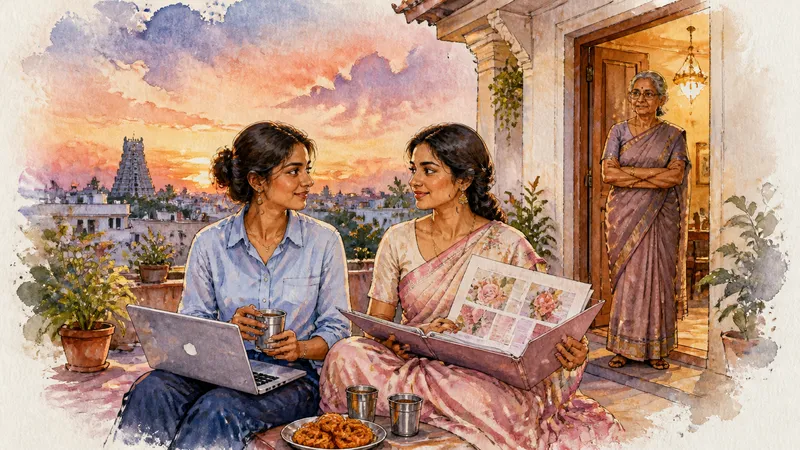
One evening, as the two sisters sat on the terrace with leftover filter coffee and a plate of murukku, Meera leaned her head on Ananya’s shoulder.
“Honestly,” she said, “main sochti thi tum mujhe judge karti ho.”
Ananya looked at the city lights and said, “I thought the same about you.”
“And now?” Ananya said, looking down at her coffee cup. “Now we build our own definition.”
Below them, from the kitchen window, Amma called out, “Dono upar baithi ho kya? Dinner lag gaya hai!”
Meera laughed loudly. “Aayi, Amma!”
Ananya stood up, then paused and looked back at the house. It was still the same old joint family home—too many opinions, too many plates, too many rituals, too much noise. But somewhere inside that noise, room had finally been made for two different dreams.
Not equal, not identical. Just allowed.
And honestly, in a house like that, allowed was a big win.
Thank you for reading this story on storydilse. Aapka pyaar, time aur support bahut valuable hai. Umeed hai yeh story aapke dil tak pahunchi hogi aur thoda sa apna sa feel diya hoga. Aise hi padhte rahiye, muskurate rahiye, aur storydilse ke saath jude rahiye.